
Competition Bow Guide 2026: Recurve vs Compound Setup &LA28
Sep 16,2026 | CHN Archery
Competition archery is entering one of its most exciting periods in decades.
With compound archery officially joining the Olympic program at Los Angeles 2028 through the compound mixed team event, interest in competition bows, target bow tuning, Olympic recurve equipment, and professional compound setups is growing quickly.
But what actually makes a good competition bow?
A competition bow is very different from a typical hunting or recreational bow. Instead of prioritizing compact size, portability, or maximum arrow speed, a target bow is designed around repeatable shot execution, balance, stability, precise tuning, and consistency over dozens—or even hundreds—of arrows.
Whether you are preparing for a local club tournament, USA Archery competition, Hyundai Archery World Cup-style target shooting, or simply want to build a more professional target setup, choosing the correct bow is the foundation.
At CHN Archery, archers can explore both Recurve Bow and Compound Bow equipment for target shooting, training, and competitive archery.
What Is a Competition Bow?
A competition bow is a bow configured for organized target, indoor, field, or 3D archery events.
The two most recognizable competition bow styles are:
Recurve Competition Bow
The recurve bow is the traditional Olympic bowstyle and remains the primary equipment used in Olympic target archery.
A modern Olympic recurve setup normally combines:
- ILF riser
- Recurve limbs
- Target sight
- Plunger button
- Arrow rest
- Clicker
- Long stabilizer
- Side rods or V-bar system
- Properly matched target arrows
Unlike compound archery, recurve shooters receive no mechanical let-off at full draw. Accuracy depends heavily on shooting form, anchor consistency, expansion, release execution, and bow tuning.
This is why searches such as Olympic recurve bow, target recurve setup, ILF recurve bow, and recurve bow tuning are closely connected with competition archery.
Compound Competition Bow
A compound target bow uses cams and cables to create a mechanical advantage during the draw cycle.
After reaching peak draw weight, the cam system reduces the amount of force the archer must hold at full draw. This reduction is known as let-off.
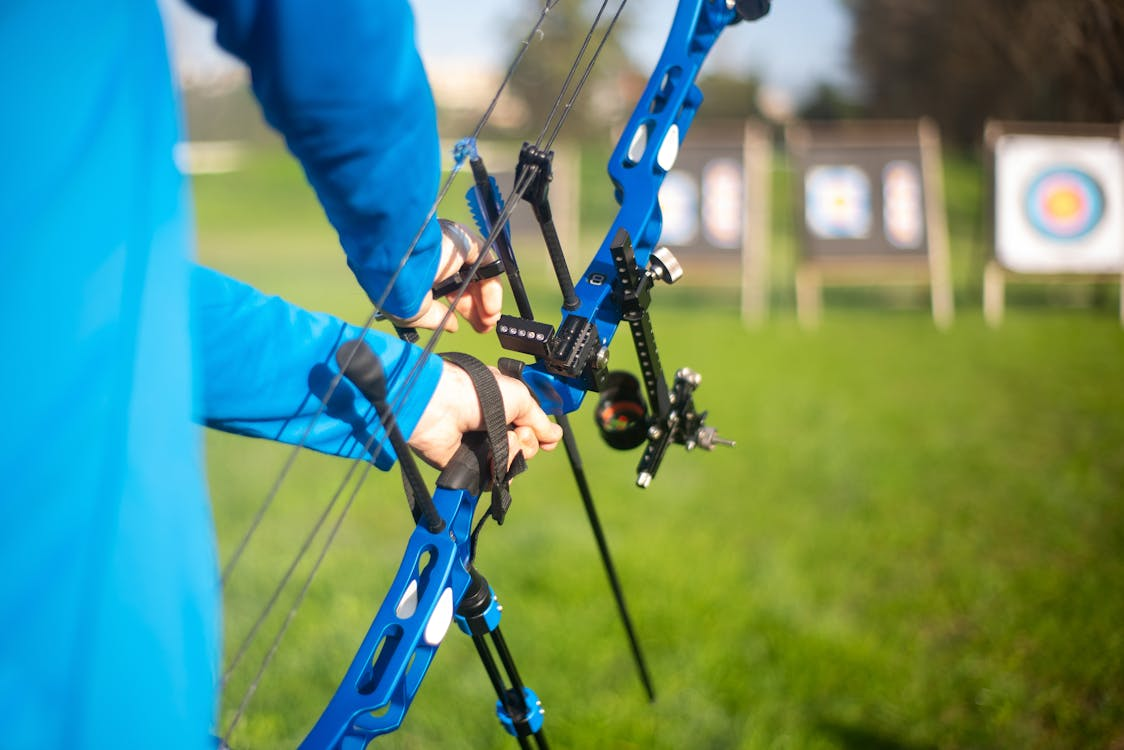
Competition compound setups commonly include:
- Target compound bow
- Long target stabilizer
- Side rods
- Adjustable arrow rest
- Peep sight
- Magnified scope
- D-loop
- Mechanical release aid
- Precisely matched arrows
Compound bows offer exceptional repeatability, but competition at a high level requires extremely precise draw length, cam synchronization, peep height, center shot, stabilizer balance, and release execution.
Visit our Recurve Bow and Compound Bow collections to compare models.

LA28: Why Compound Archery Is One of the Biggest Industry Topics
One of the biggest developments in modern archery is the addition of compound archery to the Los Angeles 2028 Olympic Games.
For the first time in Olympic history, compound archers will compete for an Olympic medal through the compound mixed team event.
Recurve will continue to feature its existing Olympic events, while compound mixed team competition expands the Olympic archery program.
This development is already increasing attention around topics such as:
- LA28 compound archery
- Olympic compound bow
- Compound mixed team archery
- Competition compound bow
- Target compound setup
- 50 meter compound archery
- World Archery compound rules
For competitive compound shooters, LA28 represents more than another tournament. It gives compound target archery a much larger global platform and is likely to introduce many new shooters to the discipline.
Recurve vs Compound Competition Bow
Here is a practical comparison for target archers.
| Feature | Recurve Competition Bow | Compound Competition Bow |
|---|---|---|
| Main international distance | 70 meters | 50 meters |
| Typical target face | 122 cm | 80 cm |
| Draw system | Direct finger draw | Cam and cable system |
| Let-off | None | Yes |
| Release | Fingers / tab | Mechanical release aid |
| Sight | Non-magnified target sight | Scope commonly used |
| Limb system | Often ILF | Split or solid compound limbs |
| Common riser material | CNC aluminum / carbon | Aluminum / carbon |
| Stabilization | Long rod + side rods | Long rod + side rods |
| Key tuning areas | Tiller, brace height, plunger, limb alignment | Cam timing, cam lean, rest position, draw length |
| Olympic status | Full Olympic bowstyle | Mixed team debut at LA28 |
Both styles demand excellent technique. The difference is where that precision comes from.
A recurve archer manages more of the shot through body alignment and release execution.
A compound archer uses more mechanical assistance, but equipment tolerances become extremely small at elite level.
All competition bows from CHN Archery are ready for professional accessories. Check our Bow Accessories for sights, rests, and stabilizers.
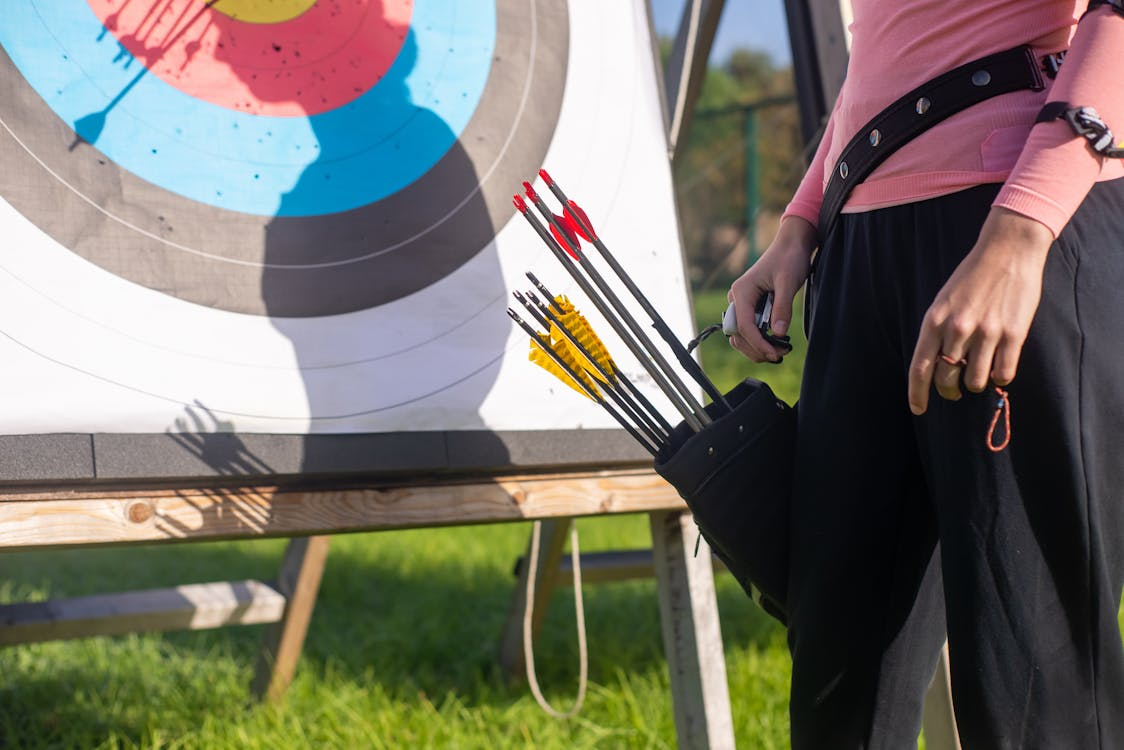
Technical Specifications – Quick Reference
Below are typical specs for competition bows available at CHN Archery
| Parameter | Recurve Competition | Compound Competition |
|---|---|---|
| Riser Material | 6061 Aluminum | 7075 Aluminum / Carbon |
| Limb Material | Fiberglass / Carbon | Carbon / Fiberglass |
| Draw Length | Fixed by limb/riser (adjustable via ILF) | Adjustable modules (24–31″) |
| Weight | 2.5–3.5 lbs (bare bow) | 4.0–4.8 lbs (bare bow) |
| Color Options | Black, blue, red, camo |
Black, camo, neon |
Who Should Choose a Recurve Competition Bow?
Choose a competition recurve if you:
- Want to pursue Olympic-style archery
- Enjoy technically demanding shooting
- Want to develop strong shooting form
- Compete in school, JOAD, club, collegiate, or target programs
- Prefer an ILF system with extensive tuning options
- Enjoy adjusting tiller, brace height, plunger, limb alignment, and stabilizer balance
Recurve rewards disciplined technique.
Small improvements in posture, anchor position, expansion, release, and follow-through can produce noticeable improvements downrange.
Who Should Choose a Compound Competition Bow?
Choose a target compound if you:
- Want extreme aiming precision
- Prefer a mechanical release aid
- Enjoy technical bow tuning
- Compete in 50m target, 18m indoor, field, 3D, or related compound divisions
- Want to explore the rapidly growing competitive compound scene ahead of LA28
- Prefer scope-based aiming and adjustable cam systems
Compound archery may appear easier because of let-off and magnified sights, but elite compound competition leaves almost no margin for error.
At high scores, one poorly executed arrow can decide a match.
Competition Bow Buying Checklist
Before buying a competition bow, consider these questions:
What discipline will you shoot?
Choose between:
- Olympic recurve
- Compound target
- Indoor archery
- Outdoor target
- Field archery
- 3D archery
- Barebow
What is your draw length?
Especially for compound archers, accurate draw length is essential.
What draw weight can you control?
Choose repeatable control over maximum power.
Is the bow compatible with competition accessories?
Check mounting options for:
- Sight
- Stabilizer
- Arrow rest
- Plunger
- Clicker
- Scope
- Side rods
Can the bow be tuned?
Look for adjustability appropriate to your discipline.
Does the setup comply with your tournament rules?
Equipment rules vary between World Archery, USA Archery, NFAA, local clubs, and other organizations.
Always check the latest rulebook for the event you plan to enter.
Applications & Who It‘s For
Target Archery (Indoor/Outdoor) – Both recurve and compound are used. Recurve for Olympic distance (70m), compound for 50m or 18m indoor.
Field & 3D Archery – Compound dominates due to accuracy and let-off, but recurve is also popular in barebow classes.
Who should choose recurve? Archers who want the pure challenge of Olympic style, or who plan to compete in school/club programs that only allow recurve.
Who should choose compound? Archers who prefer mechanical assistance, higher accuracy, and plan to compete in World Cup or NFAA events.
Frequently Asked Questions About Competition Bows
Q:Can I use a hunting bow in target competitions?
A:Usually yes for local events, but World Archery rules may require specific let-off limits (compound max 80% let-off). Hunting bows often have shorter axle-to-axle, making them less stable for target archery. For serious competition, choose a dedicated target bow from CHN Archery’s Compound Bow or Recurve Bow categories.
Q:What draw weight do I need for competition?
A:Recurve men: 45–50 lbs, women: 35–40 lbs at 70m. Compound: 50–60 lbs (actual holding weight ~10–15 lbs due to let-off). Start lower and work up. Our Recurve Bow and Compound Bow pages list draw weight options.
Q:Do I need a stabilizer for competition?
A:Yes. A proper Bow Stabilizer Weights setup (long rod + side rods) dramatically improves stability. Many competitive shooters also use a Bow Stands & Holders to protect their bow between ends.
Final Thoughts: Build a Competition Setup, Not Just a Competition Bow
The best competition bow is not simply the bow with the highest price, fastest arrow speed, or most advanced materials.
It is the bow that allows you to execute the same shot repeatedly.
For recurve archers, that means correct limb alignment, brace height, tiller, plunger tuning, arrow spine, and stabilization.
For compound archers, draw length, cam synchronization, peep alignment, arrow rest position, scope setup, release execution, and stabilizer balance become equally important.
With compound archery heading to LA28 and competitive target archery continuing to grow, there has never been a better time to improve your equipment knowledge and build a properly tuned target setup.
Explore CHN Archery Recurve Bows, Compound Bows, Bow Accessories, and Stabilizer Weights to build a competition-ready setup for your next training session or tournament.
Always confirm your final equipment configuration against the current rules of the organization sanctioning your event.