
Compound Bow Release Aid: Choose the Right Style
Oct 17,2026 | CHN Archery
Compound bow release aid choice matters for beginners, target archers and bowhunters because the device changes how you connect to the D-loop, build an anchor and execute the shot. The right style can improve repeatability, make the draw feel more controlled and fit your hand comfortably. CHN Archery carries both wrist-strap and handheld designs, so this guide compares them by use rather than treating one mechanism as best for everyone.
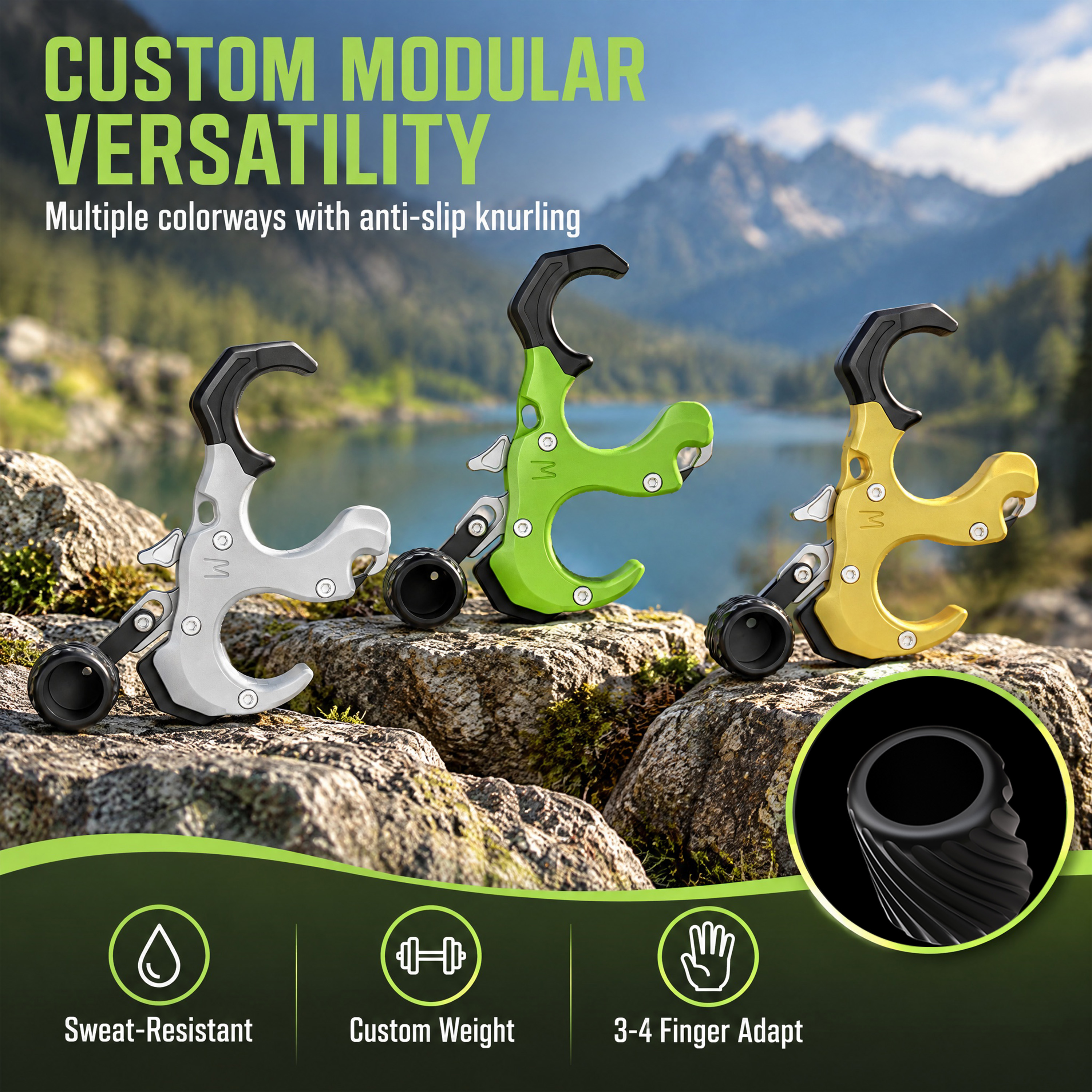
1. Release-Aid Types and Terms You Should Know
A mechanical release aid holds the bowstring indirectly—normally through a short D-loop—and opens or rotates when the archer activates its mechanism. World Archery describes the release aid as part of the standard compound system: the archer draws to the mechanical stop, aims, and activates the device to detach it from the string. That differs from Olympic recurve shooting, where the archer normally hooks and releases the string with the fingers.
Before comparing models, learn four terms. The D-loop is the cord loop tied around the nocking area; it gives the release a consistent connection and reduces direct pressure on the serving. Trigger travel is how far a trigger moves before the release fires. Trigger tension is the force needed to activate it. The anchor is the repeatable relationship between the release hand, jaw, neck and bowstring at full draw.
| Release type | How it activates | Typical strength | Main learning point |
|---|---|---|---|
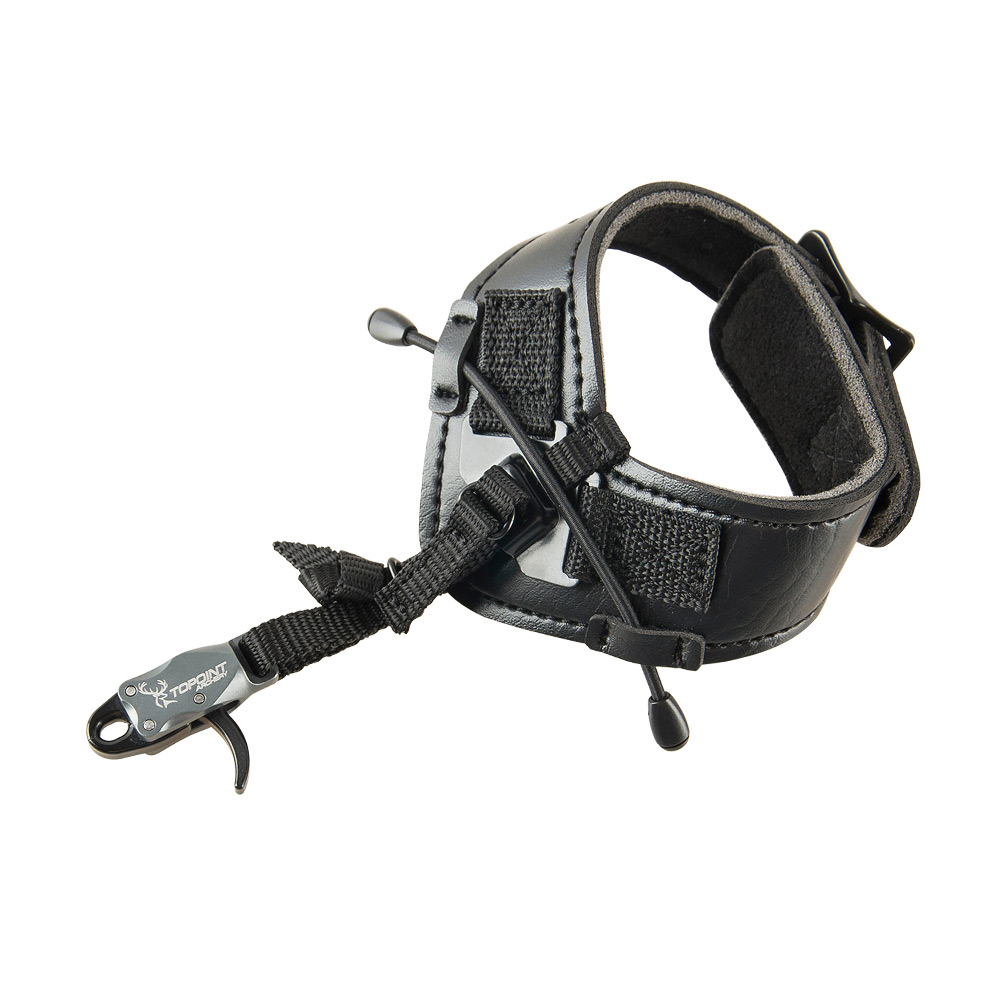
| Index wrist-strap | Index-finger trigger | Always attached to the wrist; familiar for many beginners and hunters | Set the head length so the first finger joint reaches the trigger without stretching |
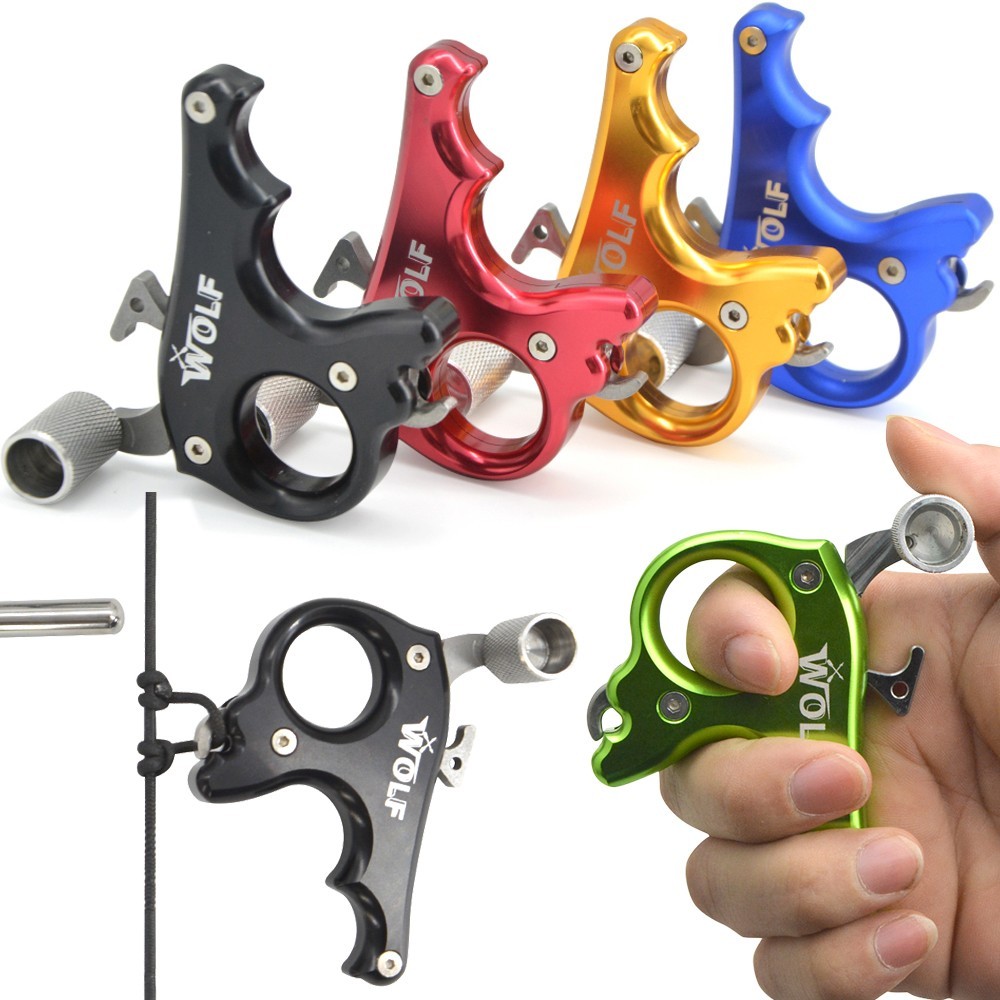
| Thumb button | Thumb-operated trigger in a handheld body | Repeatable hand geometry and a compact anchor | Fit the handle and thumb peg before reducing trigger travel or tension |
| Hinge / rotation | Handle rotation changes the hook geometry | Can support a surprise-style execution | Requires coached setup and controlled blank-bale practice |
| Resistance / pull-through | Fires when holding force exceeds its set threshold after the safety is managed | Teaches continuous expansion through the shot | The threshold must be set safely for the archer and bow |
Trigger releases can also be executed progressively; a trigger does not have to be slapped. Likewise, buying a hinge does not automatically create good back-tension technique. The device supplies a mechanism, while the archer still has to maintain alignment, aim calmly and finish the shot.
2. The Real Problem: Fit Changes the Whole Shot
Release shopping often starts with price or appearance, but the real problem is geometry. Changing from a long wrist release to a compact handheld model can move the release hand forward, alter the elbow position and change where the string touches the face. If the bow’s draw length was set around the old anchor, the new combination may feel too long or too short even though the cam module has not moved.
An uncomfortable handle creates its own compensation. A handle that is too large can spread the fingers and encourage uneven pressure. A short wrist-release head may force the index finger too far around the trigger; a long one may leave the finger reaching with its tip. Either situation can turn activation into a sudden jab rather than a controlled continuation of the shot.
Safety is the second problem. A release adjusted too light or handled with a finger on the trigger during the draw can fire before the archer reaches anchor. World Archery has specifically warned against testing an unfamiliar back-tension release alone or setting a trigger excessively sensitive. Make the first sessions close to a large target under the supervision of a qualified coach or experienced technician, and keep the arrow directed safely at the backstop throughout the draw.
3. Key Selection Factors: Hand Fit, Activation and Intended Use
Start with the bow and D-loop
A release is part of a system. Confirm that the bow is fitted to your actual draw length and that the D-loop is sound before diagnosing the device. World Archery notes that a D-loop is the normal connection between the compound string and release aid. Frayed cord, loose knots or a loop that has rotated should be inspected by a competent bow technician. Do not clip a model to the serving unless its manufacturer explicitly permits that connection.
Match the handle or strap to the archer
For a wrist model, the strap should return to the same buckle hole and the head should place the trigger near the first bend of the index finger. For a handheld model, the body should sit securely without sharp pressure or a forced finger spread. Three-finger handles can feel compact; four-finger options spread load across more of the hand. Material changes mass and feel—aluminum is usually lighter than brass—but weight preference is personal, not a universal accuracy rule.
Choose an activation style you can train safely
An index release is easy to keep attached and is practical with gloves or during a hunting setup, provided the strap and head still fit. A thumb button offers a distinct jaw-and-hand anchor and is popular in target, 3D and hunting use. A hinge or resistance release may help develop a less anticipated shot, but neither is the best first unsupervised experiment. World Archery’s coaching material recommends beginning mechanical-release work at short range on a blank bale and drawing with fingers away from the trigger.
Look for useful adjustment—not maximum sensitivity
Travel, tension, trigger position and head length should be set for control. More adjustment only helps when each setting is understood and locked securely. Start with a conservative setting, follow the exact product instructions, test the mechanism without drawing the bow, and then confirm it at close range. Never assume that turning an unlabelled screw adjusts only tension; on some mechanisms a screw affects engagement or travel.
Use-case comparison
| Priority | Useful starting style | What to verify |
|---|---|---|
| First compound lessons | Adjustable index wrist release | Strap security, head length, smooth trigger movement and coach supervision |
| Youth training | Youth-sized wrist release | The strap truly tightens to the smaller wrist; draw weight and bow fit remain manageable |
| Target or 3D consistency | Thumb button or coached hinge/resistance model | Repeatable anchor, handle size, trigger reach and a controlled execution plan |
| Bowhunting preparation | Wrist release or lanyard-secured thumb button | Retention, quiet loading, operation with planned clothing and safe let-down behavior |

4. Common Beginner Mistakes and Safer Corrections
Making the trigger “hot” on day one
Very light tension and almost no travel can make an unfamiliar release unpredictable. Begin conservatively, use the manufacturer’s instructions and change one setting at a time. If you cannot identify what a screw controls, stop and consult the maker or a bow technician.
Touching the trigger during the draw
Keep the index finger behind or away from an index trigger, and keep the thumb clear of a thumb button until the bow is settled at anchor. With a hinge or resistance release, follow its safety procedure exactly. The arrow must remain directed at a safe target and backstop.
Moving the trigger to meet the hand
Archers sometimes reach for the trigger with the fingertip or curl the thumb aggressively around the peg. Adjust the release so the hand can remain relaxed and connected. A comfortable contact point supports gradual activation; a reach often invites a punch.
Switching releases without checking draw length
Handheld and wrist releases can create different effective connection lengths. Recheck anchor, rear-elbow alignment, peep view and bow fit with a coach. Do not shorten or lengthen the bow merely to imitate someone else’s anchor.
Training a new release at full distance
Start close to a large blank target where aiming pressure is low. Learn to attach, draw, anchor, activate and let down safely before scoring. World Archery’s coaching material supports short-range blank-bale work when learning a mechanical release.
5. Recommended Approaches and Verified CHN Archery Options
Begin by browsing the Archery Release collection and filtering by activation style, hand fit and adjustment—not color alone. The following examples represent different use cases; availability and variants can change, so confirm the live product page before ordering.
For an adult beginner who wants a wrist strap
The TOPOINT TP435 wrist release lists a buckle strap, 360-degree swivel caliper head, adjustable travel and adjustable tension. Those features give a coach several fit variables to work with. The simpler AMEYXGS K3 index release lists adjustable body length and travel but not adjustable tension; its page also says it is intended for D-loop use.
For a smaller youth archer
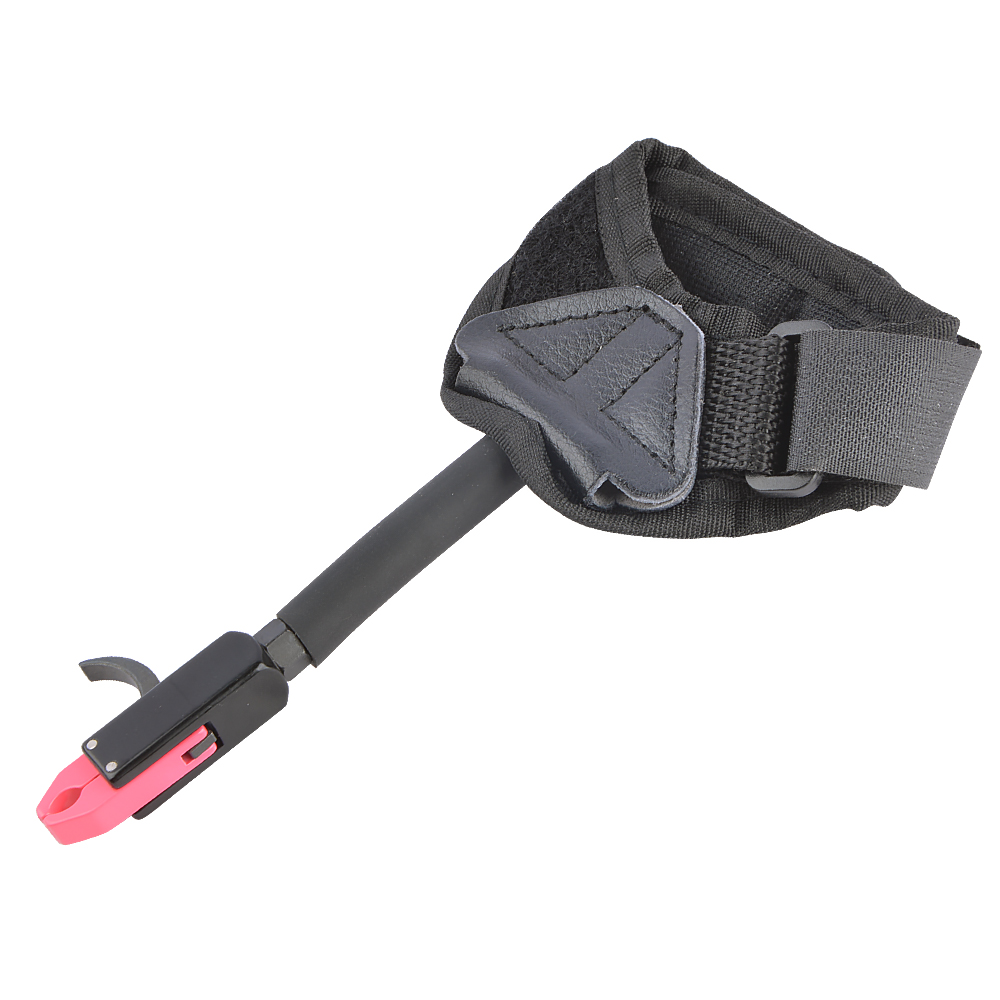
The Adjustable Youth Wrist Release lists a smaller strap, rotating head and double jaws. Its 53 g listed weight is useful context, but the important test is whether the strap secures correctly and the youth can draw the fitted bow without strain. Adult supervision is mandatory.
For a first handheld thumb button
The VITUSBOW three-finger thumb release lists adjustable sensitivity and length, automatic jaw closure, a CNC-machined aluminum body, stainless-steel jaw and wrist lanyard. The LWANO WARRIOR X1 lists a micro-adjustable trigger, rotating head and ambidextrous three- or four-finger configuration. Treat marketing statements about accuracy or speed as product claims rather than guaranteed personal results.
For more handle and material choices
The UV Button Release offers listed aluminum or copper material options, three- or four-finger styles, adjustable tension and travel, and a wrist lanyard. Material affects mass and feel; choose after handling comparable weights when possible. A release is not automatically better because it is heavier, lighter or more adjustable.
World Archery’s “A to Z of Archery: The Release Aid” provides a useful visual introduction to trigger and back-tension styles. Use it as orientation, then complete first adjustments and practice with the exact manufacturer instructions for your device.
6. Frequently Asked Questions
Should a beginner choose an index or thumb release?
An adjustable index wrist release is often the simplest supervised starting point because it stays attached and is easy to locate. A properly fitted thumb release can also work, but it changes the anchor and deserves close-range retraining rather than an instant equipment swap.
Can I use the same release for target archery and bowhunting?
Yes, if it fits reliably and suits both routines. Hunters should also evaluate retention, quiet attachment, gloves and safe let-downs. Target archers may prioritize handle feel and fine adjustment, but neither use excuses unsafe sensitivity.
How light should trigger tension be?
There is no universal safe number. Start heavier than your imagined final setting, follow the exact manual and reduce tension only while maintaining positive control. Never turn unidentified screws or test a “hot” release by drawing the bow.
Will changing releases change my draw length?
The cam’s measured draw length does not change by itself, but the new release can change the distance from the D-loop to your hand and therefore your anchor and alignment. Recheck fit, peep position and rear-elbow geometry before altering the bow.
Why am I punching the trigger?
Punching usually means the archer is forcing the shot at a chosen instant instead of continuing a controlled execution. Move close to a blank bale, lower aiming pressure and work with a coach on gradual activation; changing hardware alone is not a complete fix.
7. Summary: Choose Fit First, Then Train the Mechanism
The best release is the one that fits your hand, connects safely to your D-loop and supports a repeatable anchor without forcing the trigger reach. Start with conservative settings, practise close to a safe backstop and use qualified help for an unfamiliar mechanism. Compare the verified CHN Archery release-aid options, then select by activation style and fit—not by promises of instant accuracy.