
Archery Bow Case Guide: Soft vs Hard for Safe Storage
Oct 15,2026 | CHN Archery
Archery bow case selection is not simply a choice between a cheap bag and a heavy box. Recurve beginners, compound archers, club members and traveling competitors need a case that fits the exact bow, keeps hard parts away from limbs and cams, separates loose accessories and remains practical to carry. The right format can make routine storage cleaner, local transport easier and equipment checks more organized. CHN Archery currently lists hard-shell, padded soft and compact sling-style cases for several recurve and compound configurations.
1. Bow Case Types and Terms
A soft bow case uses fabric, padding and zippers. It is usually lighter than a hard case and often provides exterior pockets, shoulder straps or backpack straps. It suits supervised storage at home, trips to a local range and transport in a vehicle when nothing heavy will be stacked on top. Padding helps with everyday bumps, but fabric does not provide the crush resistance of a rigid shell.
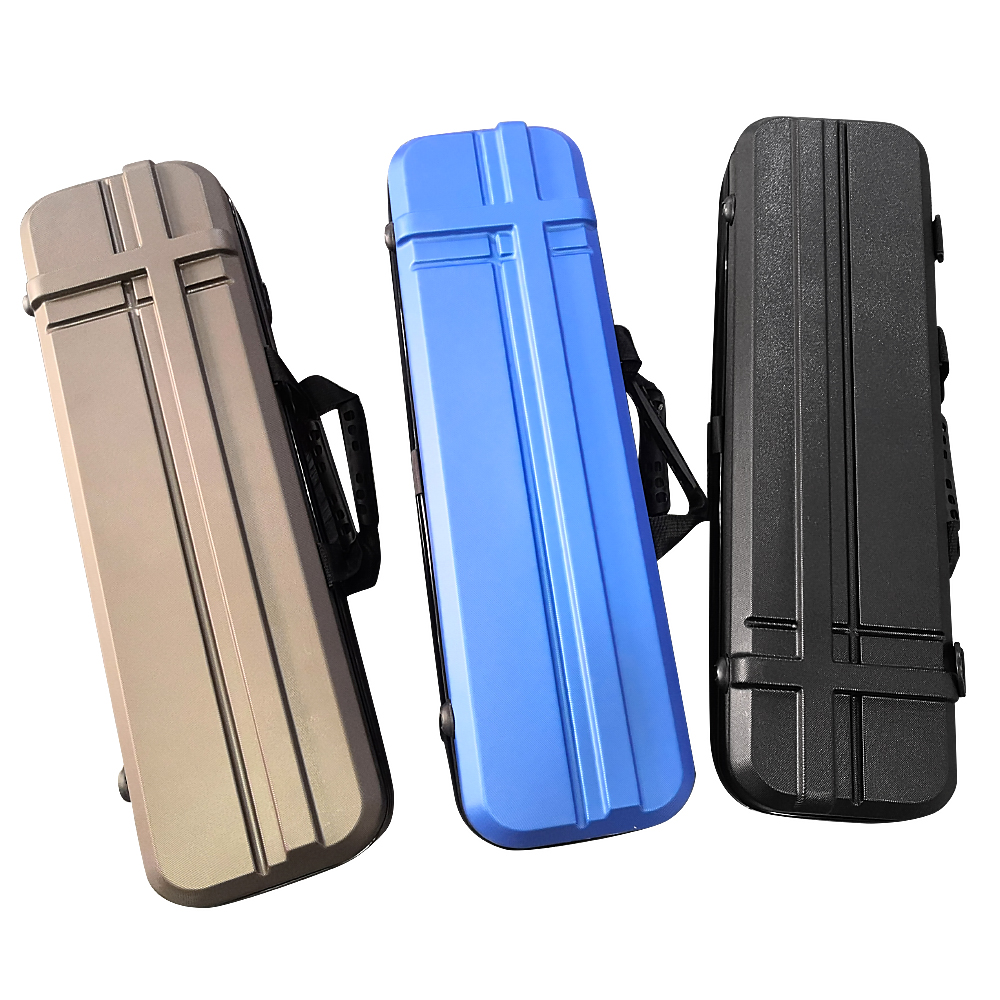
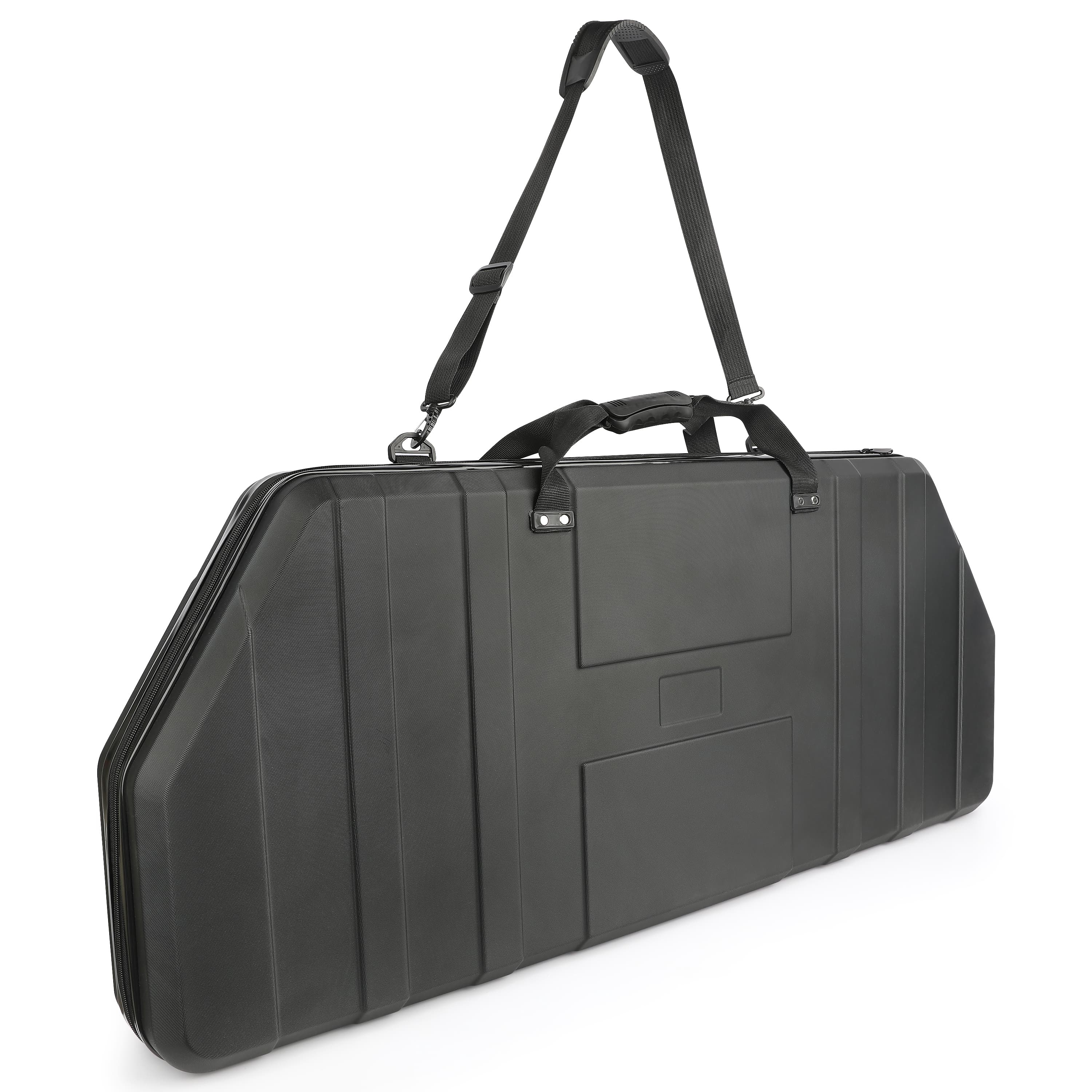
A hard bow case uses a molded shell—commonly ABS on the products compared here—with foam or fitted compartments inside. It adds weight and bulk, but it is the stronger choice when a bow will share space with luggage, tools or other equipment. A rigid case is not automatically approved for every airline or carrier. Locks, dimensions and acceptance rules must be checked with the specific operator before travel.
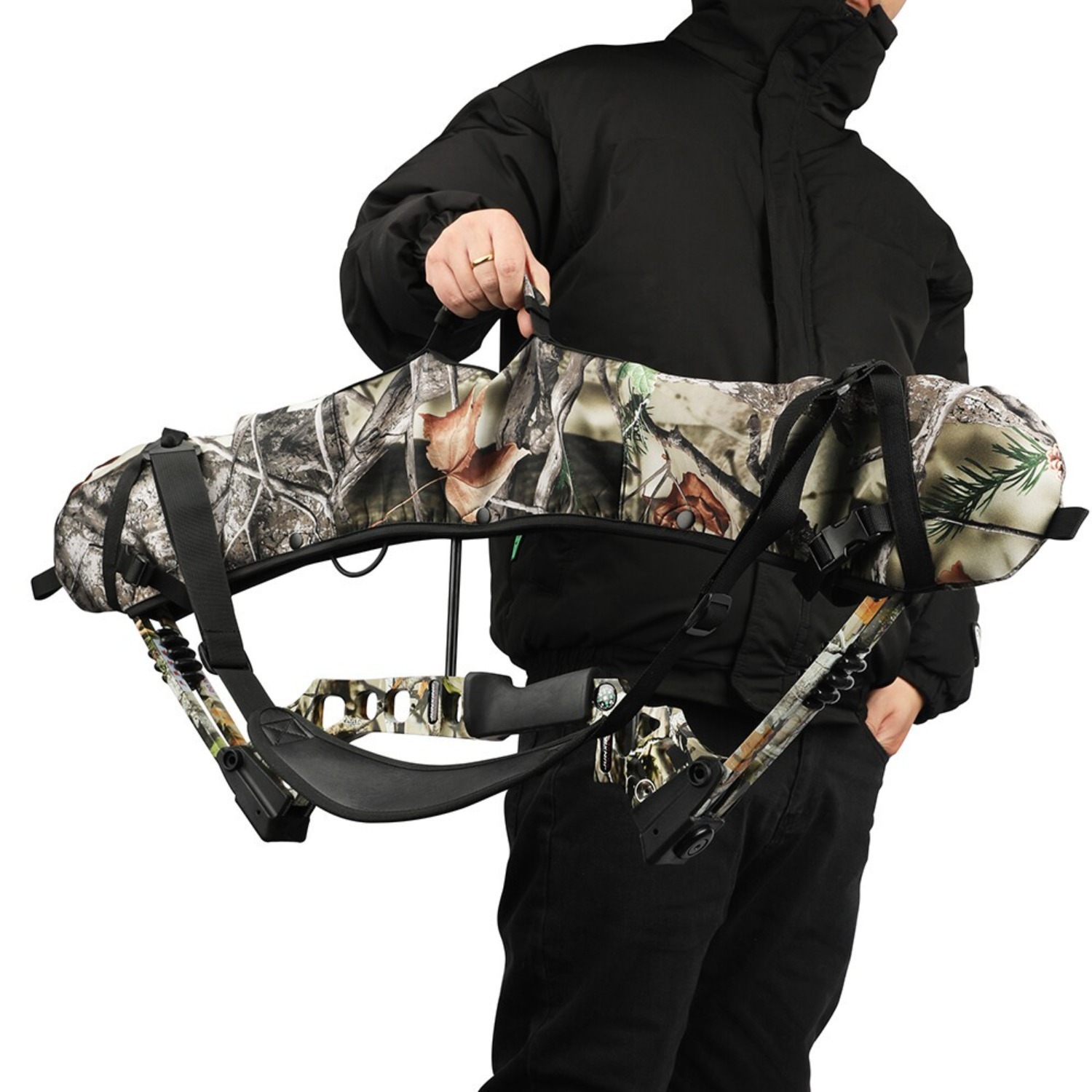
A sling or cam carrier covers the cams and connects them with a strap. It is convenient for walking from the parking area to a range and prevents exposed cams from rubbing against other gear. It does not protect the riser, sight or stabilizer like a full case, so it should not be treated as a replacement for a hard case in a crowded vehicle.
Bow terminology affects fit. A takedown recurve separates into a riser and two limbs, so its packed length is much shorter than its assembled bow length. A compound bow is commonly compared by its axle-to-axle, or ATA, dimension, but a case also needs clearance for the cams, cable guard, sight and quiver. A one-piece traditional bow needs a long case measured around the actual strung or unstrung bow specified by its maker.
Easton’s official Recurve Pack overview illustrates a fourth format: a structured backpack that carries an Olympic takedown bow and accessories while using an internal suspension system. The useful lesson is broader than one model—“soft” covers everything from a basic sleeve to a structured backpack, so compare construction rather than relying on the category name.
Easton Target Archery’s official video shows how a purpose-built recurve backpack separates the riser, limbs and accessories.
2. The Real Problem: A Case Can Be Wrong Even When It Closes
The most common case problem is hidden pressure. A zipper may close while the sight presses into the lid, a compound cam bears against foam, or a recurve limb tip sits under a buckle. That load is easy to miss at home and worse when another bag is placed on top. Closing the case should never require forcing the bow downward or bending an accessory out of the way.
The second problem is uncontrolled movement. A bow in an oversized case can slide, while releases, tools, broadheads, stabilizer weights or an arrow tube can strike the limbs and riser. Internal tie-downs and separate pockets matter because they prevent hard items from becoming projectiles during a sudden stop. Arrows belong in a dedicated tube or compartment, with points and broadheads secured according to local rules.
Moisture and heat create another risk. A case helps organize equipment; it does not make wet equipment safe to ignore. The official Genesis bow owner’s manual says to dry the bow completely before storage, avoid prolonged moisture and extreme heat, and not leave it in places such as a hot vehicle or damp basement. Those principles are sensible for any bow, while model-specific maintenance must always follow that bow manufacturer’s manual.
3. Key Selection Factors: Fit, Protection and Carry Method
Measure the packed bow, not the catalog label
For a takedown recurve, remove the limbs and measure the riser, the longer limb section and any accessory that will remain attached. Add room for padded dividers without allowing the parts to collide. For a compound, measure overall length and maximum width at the cams, then include sight and cable-guard clearance. Do not assume a “40-inch bow case” fits every 40-inch ATA bow; internal dimensions and accessory shape decide the result.
Match protection to the trip
- Home to a local range: a padded soft case can be sufficient when the archer controls loading and nothing heavy is placed above it.
- Club equipment shared by several users: compartments, visible labels and easy-to-check tie-downs reduce packing mistakes.
- Crowded vehicle or luggage handling: a rigid shell and firm internal restraint provide more crush protection.
- Walk from a vehicle to the line: backpack straps or a light sling reduce hand fatigue, but only if the bow remains balanced.
- Air travel: verify carrier size, lock and sporting-equipment rules; never infer approval from the word “hard.”
Compare the whole carrying system
Useful case features produce practical benefits: broad handles distribute load, backpack straps free both hands, tie-downs stop the bow moving, high-contrast interiors make small parts easier to see, and separate pockets keep metal tools away from finished surfaces. Water-resistant fabric can slow light external moisture, but a zipper and seams should not be assumed waterproof unless the manufacturer provides a test standard.
| CHN Archery listing | Type / listed size | Listed weight | Best comparison use |
|---|---|---|---|
| AMEYXGS recurve hard case | ABS; 70, 80 or 90 × 20 × 13 cm | 1,420 / 1,620 / 1,730 g | Takedown recurves up to listed 62 in, selected by packed-part fit |
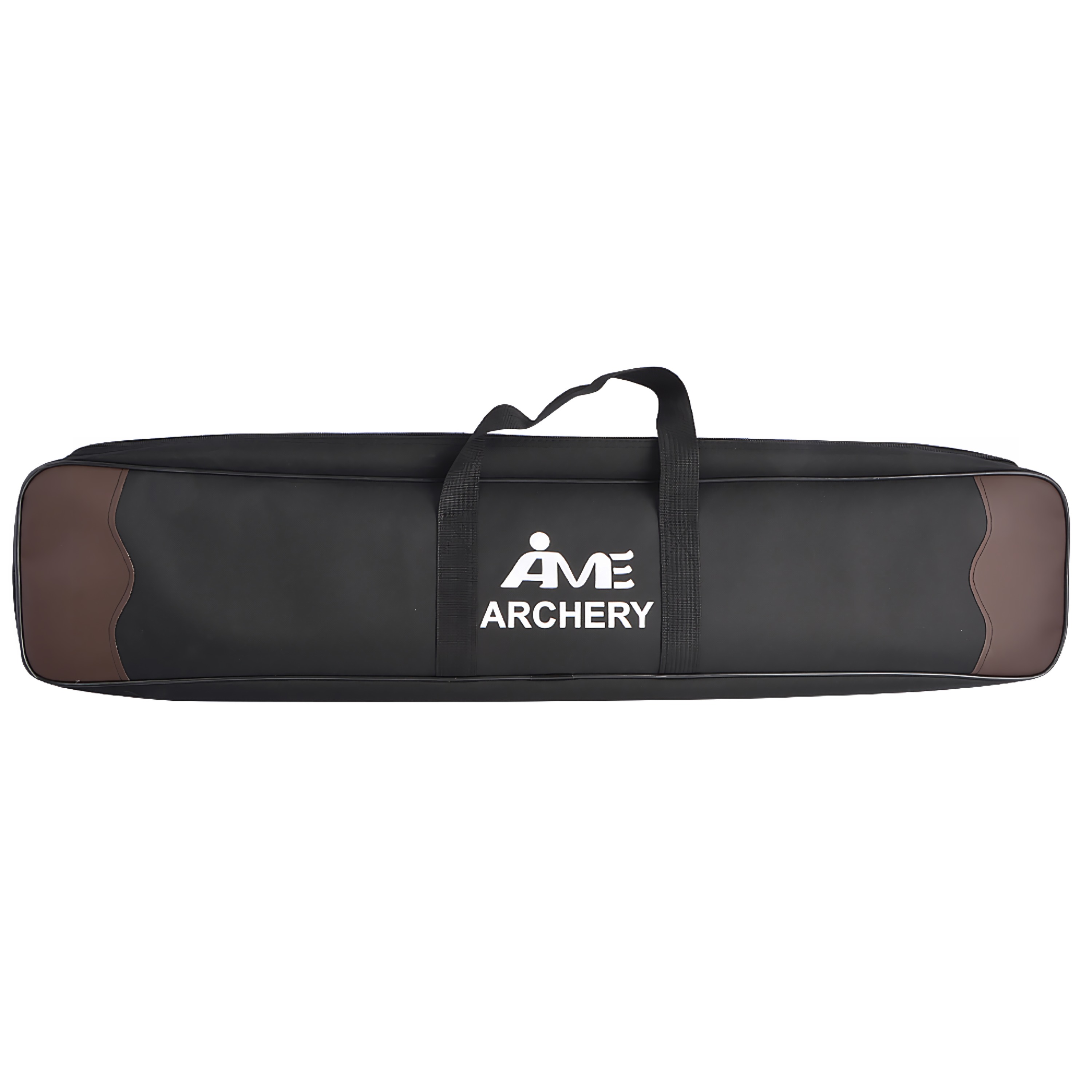
| Black canvas recurve case | Soft; 80 × 12 × 6 cm | 500 g | Light local transport for a takedown setup |
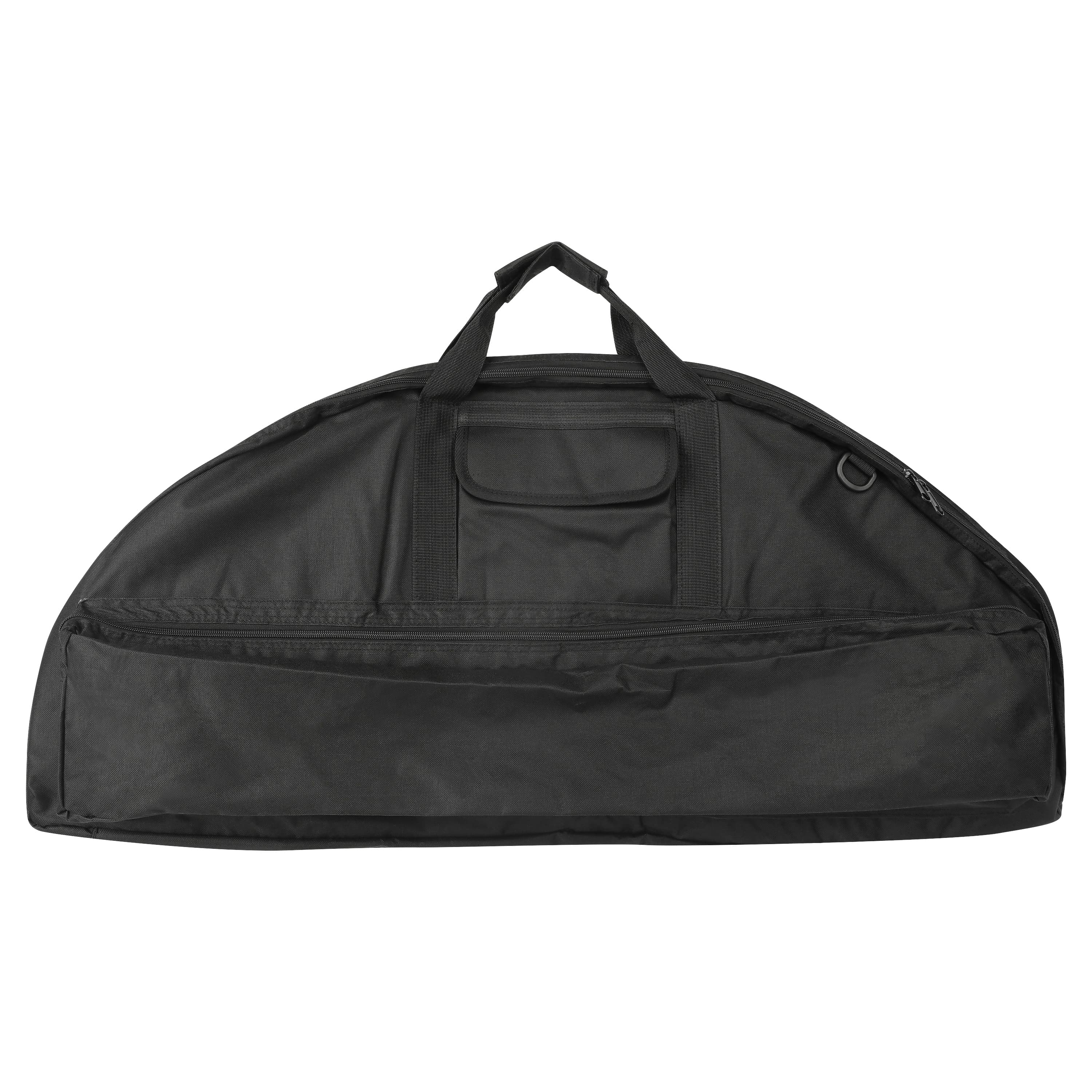
| Canvas compound soft case | Soft; 43 × 16 × 3 in | Approx. 1.8 kg / 3.96 lb | Padded carry for compounds listed up to 40 in ATA |
| Youth compound backpack case | 600D nylon; 29 × 14 × 5.5 in | 650 g | Compact compounds up to listed 29 in overall length |
| Compound cam sling | Neoprene-style “diving cloth”; up to listed 38 in ATA | 360 g | Cam coverage and controlled short-distance carry |
| AG1 compound hard case | ABS; 42.52 × 17.91 × 5.12 in | 8.05 lb | Rigid-shell reference; listing was sold out when checked |

4. Beginner Mistakes That Reduce Protection
- Buying from bow length alone. A 68-inch takedown recurve does not require a 68-inch case after disassembly, while a compound needs width and accessory clearance as well as ATA length.
- Leaving the bow wet. Open the case after rain or a humid session, dry the bow and case, and inspect metal parts, string, cables and limb surfaces before long-term storage.
- Packing loose hardware beside the bow. Releases, Allen keys, stabilizer weights and points should be in closed pockets or small organizers, not free to strike limbs or cams.
- Forcing the lid over a mounted sight. If foam compresses hard against the sight, rest or cam, remove the accessory or choose a deeper case. Foam contact is not the same as safe restraint.
- Using a case as a hot-car storage box. A case does not protect a bow from prolonged high temperature. Unload the bow and follow the manufacturer’s storage limits.
- Skipping the pre-shoot inspection. After transport, check limbs, string, cables, cams, fasteners, rest and arrows before drawing. A closed case cannot prove that every component remained correctly positioned.
- Assuming every hard case is travel approved. Check the exact external dimensions, latches, lock points and current carrier rules before a flight or shipping job.
5. Recommended Case Approaches and Internal Options
For a takedown recurve carried to weekly practice, start by measuring the packed riser and limbs. The black canvas takedown recurve case is the lightest full recurve option in this comparison at a listed 500 g, with separate compartments. If the case will be stacked with other equipment, compare the three size variants of the AMEYXGS ABS takedown recurve hard case. Select by the largest packed component, not by assembled bow length.
A second rigid recurve reference is the 37.5 × 14 × 5-inch ABS takedown case. It was sold out when checked, and its page shows an inconsistent metric conversion, so confirm actual dimensions with the store before relying on the specification. That inconsistency is also why careful measurement should come before purchase.

For an adult compound used at a local range, the AMEYXGS canvas compound soft case provides a fleece-padded interior, three internal straps, three exterior pockets and shoulder or backpack carry. Measure the bow with any sight or quiver that will remain attached. For a compact youth bow, the 29-inch youth compound backpack case lists foam padding, tie-down straps and an arrow pocket; “youth” is a product category, not proof of fit.
For a careful walk from a vehicle to the shooting line, the compound cam sling and carrier is a low-weight option for bows listed within 38 inches ATA. Use it only when exposed parts will not contact walls, door frames or other equipment. Where rigid protection matters, the sold-out AG1 compound hard case remains a useful size-and-weight reference while comparing available cases.
None of these pages provides a model-specific certification or independent impact test, so this guide does not claim one. The honest choice is based on verified dimensions, materials and features, followed by a dry fit with the actual bow. Keep the receipt and avoid removing protective films or modifying foam until fit is confirmed.
6. Frequently Asked Questions
Is a soft or hard bow case better for beginners?
A padded soft case is often easier for local practice because it is lighter and simpler to carry. Choose a hard case when the bow may be stacked with luggage or exposed to greater impact. Fit and internal restraint matter more than the beginner label.
How much extra room should a bow case have?
It needs enough clearance that cams, limb tips, sight and rest are not compressed, but not so much that the bow slides. Because padding and accessory shape vary, compare the actual internal dimensions or perform a dry fit instead of relying on one universal allowance.
Can I store my bow in its case all year?
Yes, if the bow is clean, completely dry, inspected and stored within the temperature and humidity limits in its manual. Do not leave a closed case in a hot vehicle, damp basement or other extreme environment.
Should I remove the sight and stabilizer before packing?
Remove them when the case lacks dedicated clearance or when attached parts press into foam or the lid. If the case is designed for mounted accessories, secure the bow and confirm that nothing shifts when the closed case is gently moved.
Can a hard bow case be checked on an airline?
Possibly, but a hard shell alone does not guarantee acceptance. Ask the airline about current sporting-equipment dimensions, locks, fees and prohibited items, and comply with all rules for arrows and broadheads at both ends of the trip.
Does a waterproof label mean I can put wet gear inside?
No. External water resistance does not remove moisture already on the bow, and seams or zippers may have different protection levels. Dry the bow and case fully before storage.
7. Summary: Fit the Case to the Bow and the Journey
A useful bow case solves three problems at once: it fits without pressure, restrains equipment without collisions and provides enough protection for the actual trip. Measure the packed bow and accessories, choose soft, hard or sling construction by handling risk, keep wet or loose gear out, and inspect the setup after every journey. For a takedown recurve, compare packed riser and limb length; for a compound, include cam width, sight clearance and overall dimensions.
Ready to compare? Review the verified recurve and compound case links above, match the listed dimensions to your equipment, and contact CHN Archery before ordering if any measurement or compatibility detail is unclear.