
Carbon Arrow Safety: Inspect Damage Before Every Shot
Nov 04,2026 | CHN Archery
Carbon arrow safety starts before the bow is drawn. Whether you shoot target rounds at a club, practise in the backyard on an approved range, or prepare equipment for a hunting trip, a short inspection can reveal damage to the shaft, nock, point, insert or fletching before the arrow is loaded. The goal is simple: identify warning signs, separate questionable arrows and use only equipment that matches your bow. Carbon construction offers a useful combination of low weight, stiffness options and consistent dimensions, but no arrow is immune to impact, transport or handling damage. CHN Archery supplies finished arrows, shafts and compatible components across target, traditional and compound setups; this guide explains how to evaluate them without turning a safety check into guesswork.

1. Carbon Arrow Terms You Need to Know
An arrow is more than a tube with a point. The shaft carries the load at launch. The nock connects the arrow to the string. The point or broadhead attaches directly or through an insert. Vanes or feathers make up the fletching, while some builds use pin bushings or collars around vulnerable ends. Damage to any one part can make the complete arrow unfit to shoot.
Spine describes shaft stiffness, not quality. A smaller published spine number generally indicates a stiffer shaft within the same measurement system. Easton explains static spine as measured deflection under a standard load, while dynamic spine describes how the arrow responds to the energy of a particular bow. Draw weight, arrow length, point weight, release method and cam design can all change that dynamic response. That is why a 500-spine arrow is not automatically suitable merely because another archer uses one.
Material also matters. All-carbon shafts, aluminum shafts and carbon-aluminum shafts can show damage differently. Carbon damage may present as a crack, split, raised fiber, soft spot or unusual sound during a manufacturer-approved check. Aluminum may dent or bend. A cosmetic scuff is not automatically structural damage, but a visual glance alone cannot prove a carbon shaft is sound.
For selection, measure arrow length from the deepest part of the nock groove to the cut end of the shaft, excluding the point, unless the manufacturer specifies otherwise. Record the bow's measured draw weight at your draw length, the finished arrow length and point weight before using a spine chart. Browse the arrow shaft collection to compare available diameters and spine ranges, but treat the product listing as a starting point rather than a substitute for a model-specific chart.
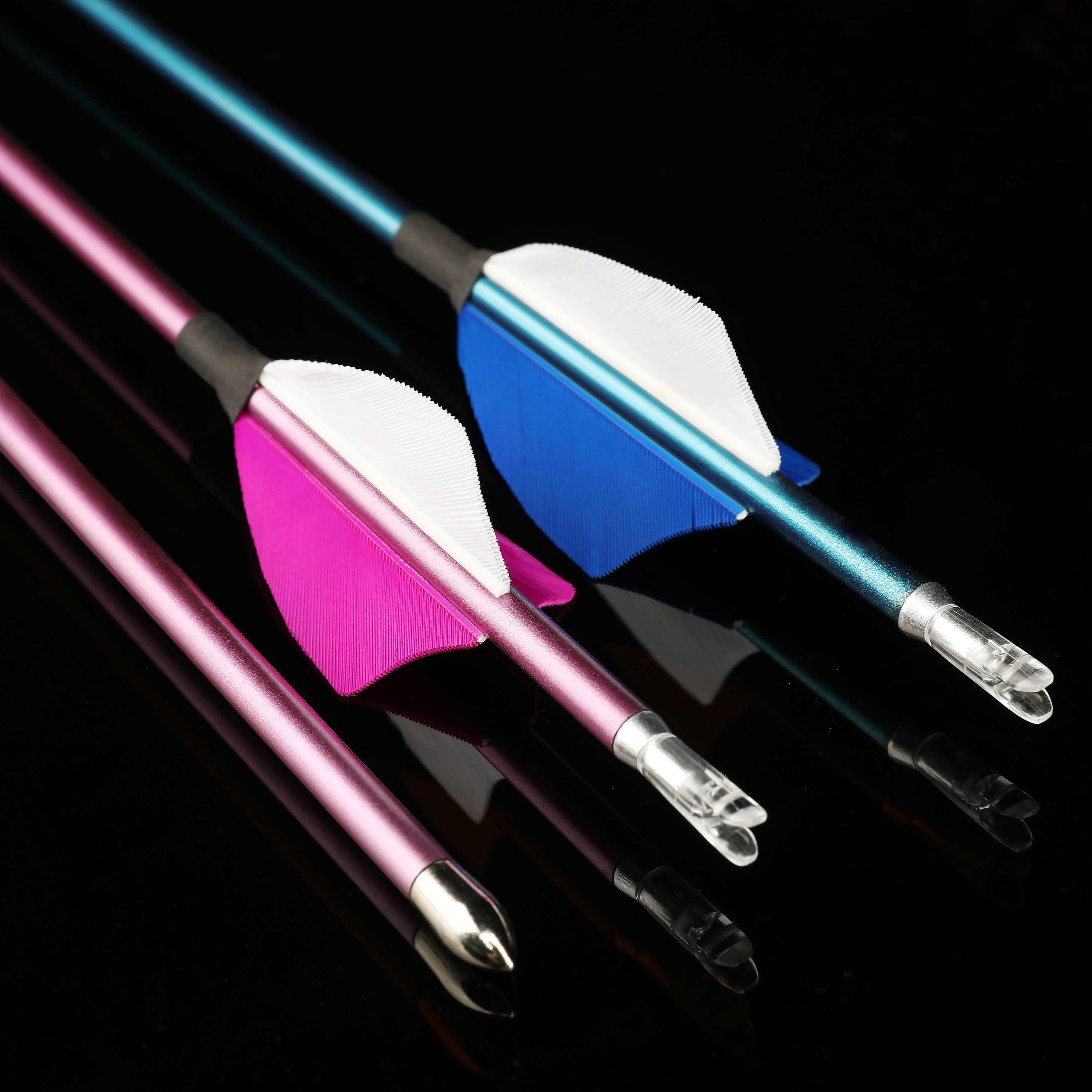
2. The Real Problem: Damage Is Not Always Obvious
The easiest arrows to retire are the visibly broken ones. The difficult decisions involve an arrow that missed the target, struck the frame, hit another arrow, bounced across concrete or travelled loose in a vehicle. It may still look straight. The nock may remain seated. The shaft finish may hide a hairline split or a damaged area beneath a wrap.
Easton's published safety instructions warn that an arrow can be damaged during transport, handling, hard impacts, contact with other arrows or use on game. The manufacturer instructs users to inspect the shaft and components before each shot and never shoot a damaged arrow. That guidance is intentionally conservative: failure can occur when the arrow is highly loaded during release, close to the bow hand and other people.
A practical range habit is to create a physical quarantine. Carry a separate tube or mark a “do not shoot” pocket in your case. If an arrow produces an unfamiliar sound, lands unusually, shows a loose nock, or was involved in a hard impact, put it there immediately. Do not return it to the shooting group because the next end is about to start. A questionable arrow is not a spare arrow.
The inspection routine below uses Easton's current arrow warning and use instructions as an authoritative example. It does not replace the directions supplied with another brand. If your arrow manufacturer specifies a different test, a different maximum deflection, or professional assessment only, follow that model-specific guidance.
3. Key Factors: Fit, Inspection and Retirement Decisions
Confirm bow-and-arrow compatibility first
An undamaged arrow can still be an unsafe choice if its spine, length or components do not suit the bow. Verify actual draw weight, not the number printed on a recurve limb at a different reference length. Confirm that the finished shaft remains long enough at full draw and that the selected point, insert, nock and collar match the shaft's exact inner or outer diameter. Never assume that parts described as “4.2 mm” or “6.2 mm” are interchangeable across every model.
Use a consistent pre-shot sequence
- Start with the nock. Look for cracks, whitening, distortion or a loose fit. Confirm that it is fully seated. A damaged nock should be replaced, but a loose nock can also signal damage at the shaft's nock end; investigate the shaft before fitting a new part.
- Rotate and feel the shaft. Under good light, slowly turn the arrow while running fingertips along its length. Look and feel for nicks, splits, dents, raised fibers, soft spots or a change under cresting. If a wrap hides the suspect area, do not declare the arrow safe merely because the wrap looks intact.
- Inspect the point and insert interface. Check for gaps, movement, bending or impact damage. A component that repeatedly loosens deserves diagnosis, not another quick tightening.
- Check fletching and clearance. Loose vanes usually affect flight rather than shaft strength, but they can expose a hard impact or poor clearance that warrants a closer shaft inspection.
- Perform only the manufacturer's carbon-shaft test. For Easton carbon arrows, Easton describes a controlled flex check away from yourself and others, repeated while rotating the shaft, plus a twist check. Use the exact instructions for your model; do not improvise greater bending force.
If you see, hear or feel evidence of structural damage, retire the arrow. Do not tape, glue or wrap over a crack and return the shaft to service. When the result is uncertain, ask a qualified pro shop or the manufacturer. Easton's own instructions say to seek assistance if you cannot adequately perform its tests.
Easton's official overview shows how different carbon shaft constructions are made. Construction differences are useful context, but the safety instructions for your exact shaft remain decisive.

4. Common Beginner Mistakes
Checking only after a miss
A miss is an obvious trigger, but damage can also come from transport, an arrow-to-arrow strike or a loose component. Build the check into every shooting sequence: nock, shaft, components, then load. At minimum, perform a more deliberate inspection after any hard or unusual impact.
Using a spin test as proof of structural safety
An arrow spinner can reveal wobble in a shaft, point or insert assembly. It cannot prove that a carbon laminate is free of cracks. Use spinning as a straightness and alignment diagnostic, not as a replacement for the manufacturer's inspection procedure. The arrow building and repair tools collection includes alignment and assembly tools, but tools do not overrule visible or audible damage.
Flexing too aggressively
“More force” is not a better test. Excessive or improvised bending can damage a shaft or send fragments toward you. Keep the arrow pointed away from people and follow the maker's stated method and limits. Wear eye protection when working on arrows and stop if you do not understand the instructions.
Pulling arrows sideways
Twisting or levering a deeply embedded shaft against a hard target can load it unnecessarily. Clear the shooting line, grip the shaft close to the target face and pull in line with the shaft. A purpose-built big-grip arrow puller can improve grip on dense target material, but it does not make a damaged shaft safe.
Mixing components by appearance
Two inserts or nocks can look similar yet have different tolerances. Check the product's component system and exact size. Browse inserts, pins and collars by the shaft specification, then confirm fit before use. If a nock rotates or backs out more easily than intended, inspect both the nock and the shaft end.

5. Recommended Arrow Choices and a Safer Kit
Choose arrows by use case and verified compatibility, not by the strongest marketing phrase. A club beginner may value ready-to-shoot consistency and easy component replacement. A traditional archer may prefer a larger-diameter, wood-look shaft for a custom build. A competitive archer may prioritize a micro-diameter shaft and a tighter published straightness tolerance. None of those preferences removes the need for inspection.
| Store option | Published specifications | Practical fit |
|---|---|---|
| SHARROW 4.2 mm target arrows | 31 in shaft; spine 400–1000; 4.2 mm ID; ±.006 in straightness; finished 12-pack | Target, field and 3D users who want a finished arrow and a broad spine range. Confirm the exact spine against the bow setup. |
| SHARROW 6.2 mm traditional shafts | 31 in; spine 340–600; 6.2 mm ID; ±.003 in straightness; bare shafts | Traditional builds where the archer or technician will select compatible points, nocks and fletching. Product availability should be checked before planning a set. |
| PANDARUS Champion 4.2 mm arrows | 30–32 in options; spine 300–800; 4.2 mm micro diameter; ±.001 in published straightness; 12-pack | Indoor or outdoor competition setups requiring detailed spine and length selection. Confirm the chosen variant and included components before ordering. |
These specifications are transcribed from the linked CHN Archery product pages and are not independent test results. CHN Archery lists carbon material, spine, dimensions and package contents for these models; the pages do not provide an independent certification or model-specific damage-inspection manual. Before first use, retain the packaging, request the exact safety instructions if they are not included, and record the selected variant.
A practical maintenance kit needs little space: a bright inspection light, a clean cloth, a marker for quarantined arrows, spare model-correct nocks, an arrow puller and any manufacturer-approved assembly tools. Avoid solvents, heat or adhesives unless the shaft maker expressly permits them. Easton, for example, advises against hot-melt glue on its carbon arrows because heat can damage their structure; that is manufacturer-specific guidance, not permission to substitute another adhesive on an unrelated shaft.

6. Carbon Arrow Safety FAQ
How often should I inspect a carbon arrow?
Follow the arrow manufacturer"s instructions. Easton says to inspect the shaft, nock and components before every shot, including the first shot with a new arrow. Always perform a deliberate check after a miss, hard impact, arrow strike or transport incident.
Can I keep shooting an arrow with a small crack?
No. A crack, split, raised fiber, soft spot or other structural warning is a reason to retire the shaft. Do not hide the area with tape, a wrap or adhesive, and do not cut it shorter for reuse unless the manufacturer explicitly approves a documented repair procedure.
Does a straight spin mean my carbon arrow is safe?
No. A spin can reveal wobble or component misalignment, but a shaft may spin straight and still contain structural damage. Combine alignment checks with the maker"s visual, tactile and—when specified—controlled flex or twist procedure.
Can I replace a damaged nock and shoot immediately?
Replace a damaged nock only after inspecting the shaft's nock end. A loose or damaged nock may accompany a crack or fit problem in the shaft. Use the exact nock system for the model and verify secure seating before use.
How do draw weight and arrow length affect spine choice?
Higher stored energy and a longer finished arrow generally change the stiffness requirement, while point weight, release method and bow design also affect dynamic spine. Use the exact manufacturer's chart with measured draw weight and finished arrow length; do not select by draw weight alone.
7. Make Inspection Part of Every End
A reliable safety routine is intentionally repetitive: verify compatibility, inspect the nock, rotate and feel the shaft, check the point and insert, review the fletching, then apply only the manufacturer's specified test. Quarantine anything questionable and retire anything damaged. That habit supports beginners, club archers, competitors and hunters alike because it removes time pressure from the decision.
Start by matching your bow to a clearly specified arrow, then keep the correct replacement components and pulling tools in your case. Explore CHN Archery's competition arrow collection or compare arrow shafts, and ask for model-specific guidance whenever a specification or safety instruction is unclear.